



Key facts
- Pearson came closer than most anyone expected to winning.1
- Southern Democrats see glimmers of opportunity for lasting, even generational change in wins such as Democrat Scott Colom’s in Mississippi, where he beat Republican incumbent Sen. Cindy Hyde-Smith on a razor-thin margin to become the first Black senator from the state since Reconstruction.1 They also see it in surprisingly close gubernatorial races in Tennessee and Florida, where Republicans eked out wins with one or two percentage points over their Democratic opponents.1
- Pearson’s Republican legislative colleagues redrew the U.S. House district earlier this year to break up a longtime Democratic stronghold around the majority-Black city of Memphis, diluting it with Republican-heavy areas to net the state an additional GOP seat in Congress.1 Pearson lost to Republican Brent Taylor by about 1 percentage point in the newly drawn district, which the nonpartisan Cook Political Report said President Donald Trump would have won by 21 points.1
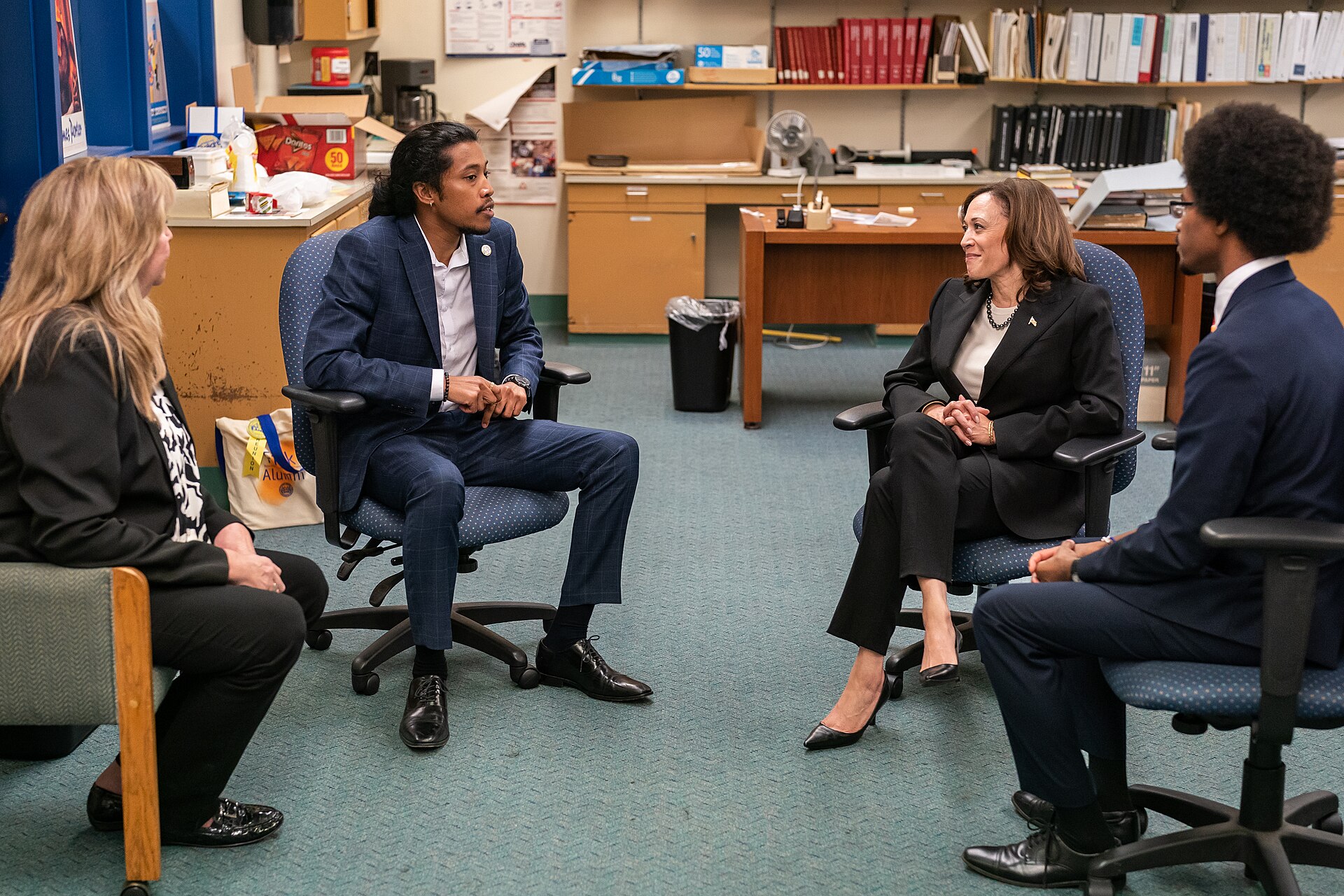
Tennessee state Rep. Justin Pearson is back on the road visiting churches and community centers across the congressional district he narrowly lost..1 He wants to thank voters who supported him.1
Pearson’s Republican legislative colleagues redrew the U.S. House district earlier this year to break up a longtime Democratic stronghold around the majority-Black city of Memphis, diluting it with Republican-heavy areas to net the state an additional GOP seat in Congress..1 Pearson lost to Republican Brent Taylor by about 1 percentage point in the newly drawn district, which the nonpartisan Cook Political Report said President Donald Trump would have won by 21 points.1
“I was campaigning in communities that were over 60% rural, white, Southern, and we came within one point,” Pearson said.
A pattern across the Deep South
His narrow defeat is part of a pattern that has repeated across the Deep South up and down the midterm ballot, where the blue wave that engulfed other parts of the country only lapped at Alabama, Louisiana, Mississippi and Tennessee..1 Republicans held onto power in those states, for the most part..1 But Democrats made significant inroads that would have seemed unthinkable a year ago, including a nail-biting Senate race in Mississippi where the Democrat squeaked out a win over the Republican incumbent and down-ballot races where Democrats flipped state legislative seats in areas where Trump won with wide margins just two years ago.1
Many
Many experts remain skeptical that states such as Alabama or Mississippi are on a path to become neighboring Georgia, which is now a solid battleground state where Democrats won every statewide seat on the ballot this year..1
David Hughes, a political science associate professor at the University of Louisiana at Lafayette who studies the politics of the American South, said, “I know Democrats get excited in places like Alabama and Louisiana and Mississippi when Democrats win elections.”1
Voters were primarily motivated by anger over issues including high costs, the Iran war and congressional redistricting..1
“You knock enough doors, you talk to enough people, you go to enough places, and you’re hearing the same stories,” Pearson said.1
Glimmers of opportunity
Southern Democrats see glimmers of opportunity for lasting, even generational change in wins such as Democrat Scott Colom’s in Mississippi, where he beat Republican incumbent Sen. Cindy Hyde-Smith on a razor-thin margin to become the first Black senator from the state since Reconstruction..1 They also see it in surprisingly close gubernatorial races in Tennessee and Florida, where Republicans eked out wins with one or two percentage points over their Democratic opponents.1
None of that means the Deep South has suddenly become a different place politically, said Anneshia Hardy, a voting rights activist in Alabama who studies Southern politics.1